
What is an industrial relocation?
An industrial relocation involves moving machinery, production lines, and equipment to a new facility or within the current facility. The difference between a standard relocation and an industrial relocation lies in the items that need to be moved.
An industrial relocation is never about chairs, desks, computers, and the like. It’s about machines, production lines, and equipment that must be disassembled, moved, and reassembled with care and precision.
A typical company that handles business relocations does not have the specialized knowledge, experience, and certifications required to carry out this type of project. Please contact us to discuss the options for your business relocation.
Moving machinery within or between business premises
Relocating a business does not always mean moving to a new facility; it can also involve moving a machine, piece of equipment, or production line within the current facility. Internal relocations within a factory, production hall, or warehouse occur regularly.
We take the hassle out of both internal and external business relocations for companies. This requires specialized knowledge and experience to tackle the challenges that arise. Challenges such as limited space, heavy machinery, fragile equipment, accessibility, and minimizing downtime are common in business relocations, both within and between business premises.
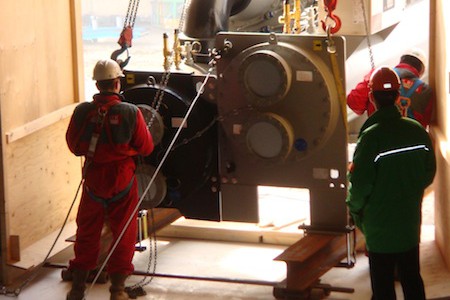
Relocating Complete Production Lines
Production lines consist of multiple machines, conveyor systems, control systems, and equipment that are interdependent. When relocating a production line, following the correct sequence for disassembly, transport, and reassembly is essential to prevent errors and production losses.
Moving heavy machinery and equipment
Heavy machinery often requires special equipment to be moved. Equipment such as hydraulic jacks, air cushions, transport rollers, gantry cranes, forklifts, or mobile cranes is often used for this purpose.
Business Relocation with Minimal Production Downtime
It is often very important to keep production downtime to a minimum during a business relocation. That is why a business relocation is always carefully planned so that production can continue as much as possible and potential risks can be properly taken into account.
By moving in phases, implementing temporary production stoppages, working in parallel, ensuring effective communication, and getting everything up and running quickly, we minimize downtime. Of course, this varies depending on the specific relocation, and all of these details are worked out in the plan during the preparation phase.
Please feel free to contact us to discuss all the options.
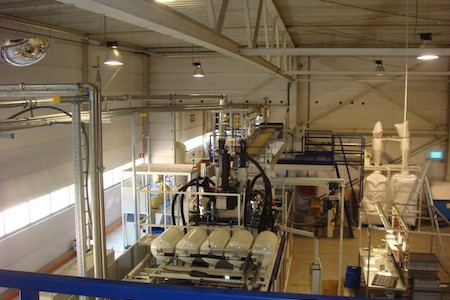
The Process of Relocating a Business
Preparation
Every business relocation begins with thorough and meticulous preparation, during which the entire situation is assessed and evaluated.
Inventory
We take inventory of all machines, equipment, workstations, and tools. In doing so, we record dimensions, weights, connections, and any special features.
Project Planning
We are dividing the entire business relocation into phases so that the work proceeds in an organized manner and production is disrupted as little as possible.
Technical recording
During the technical survey, we examine door openings, floor load capacities, ceiling heights, lifting points, power supplies, and other technical aspects.
Route Inspection
We check which route the machines can safely take, both within the building and to the new building.
Disassembly
Before beginning disassembly, we safely disconnect the electrical, pneumatic, hydraulic, and mechanical connections. Then the “actual” disassembly can begin.
Labeling and Documentation
We label and document all parts, cables, and connections so that we can complete the assembly more quickly and without errors.
Packaging
Some machines are sensitive to dust, moisture, vibrations, and damage during shipping. To protect them, we package the machines properly.
Internal Transportation
We move the machines within the factory building using specialized transport equipment to prevent damage to the machines and the surrounding area.
Hoisting Equipment
Sometimes, machinery needs to be hoisted over roofs, facades, or between floors when the normal passageways do not provide enough space. We take this into account in the plan.
Moving Around in Confined Spaces
Narrow or low passageways require us to use specialized techniques to maneuver the machines through them.
Means of Transportation
For transportation, we use the following equipment, among other things: gantry cranes, mobile cranes, forklifts, hoists, transport trailers, machine rollers, and hydraulic jacks. We use this equipment to load, secure, transport, and unload heavy machinery.
Reassignment
When repositioning the machines, we position them precisely and align them.
Connect
Once the machines are in place, we’ll connect everything and test them. Only once everything has been tested and is working as it should—or even better—will the relocation be complete.
Safety During a Business Relocation
The safety of our staff and equipment is always our top priority during every business relocation. To ensure the safety of our staff and equipment, we always conduct a comprehensive and thorough risk assessment during the preparation phase. We incorporate this risk assessment into the plan so that all risks are minimized.
In addition, our staff holds the appropriate certifications and qualifications and is equipped with the necessary protective gear for every project. Machine safety is also important; damage to machines results in significant unnecessary costs.
To ensure the safety of your machines, we make sure that all machines are protected with the appropriate packaging materials wherever necessary. In addition to the safety of personnel and machinery, we also pay close attention to the safety of the building itself; we inspect the floors, doors, walls, and structural elements to ensure they remain undamaged.
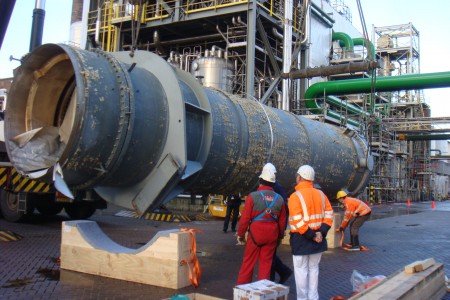
A single point of contact for the entire business relocation
We handle complete business relocations. The advantage of this is that everything is managed from a single point of contact, and there is one point of contact for the entire relocation process. This prevents unnecessary downtime caused by poor communication between different companies and eliminates the need for extensive coordination, as we handle this for the entire project.
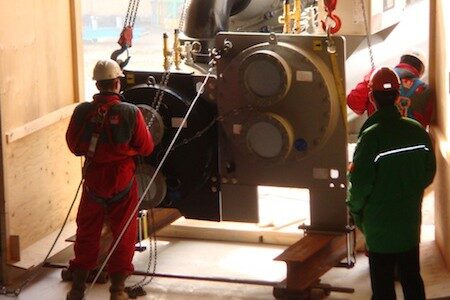
Temporary Storage of Machinery
It often happens that machinery needs to be temporarily stored because the new facility is not yet ready for installation. In such cases, we offer storage and climate-controlled storage for machinery.
By storing your items with us, you prevent damage from moisture and dust, ensure quick delivery so that assembly can begin, and make it possible to move in phases when necessary to minimize production downtime.
Please contact us to discuss all the options
Benefits of Professional Business Relocation
Companies often choose a specialist in industrial relocations. They do this because we offer a complete, hassle-free service. This means you have a single point of contact, work with experienced relocation specialists, and benefit from efficient planning that minimizes production downtime.
We ensure that the relocation is carried out safely and minimize the risk of damage to the machinery. Are you curious about the options? Please feel free to contact us to discuss them.
Frequently Asked Questions About Business Relocation
How long does a business relocation take?
The duration of a business relocation depends on the scope of the project, the number of machines, the complexity of the equipment, and the distance between the locations. Small machine relocations can be completed in a single day, while moving an entire production line or production environment can take several days or weeks. We draw up a clear schedule in advance so that you know exactly what to expect.
Can machines be moved during production?
In many cases, it is possible to relocate machinery while other parts of production remain operational. By carefully planning the work and carrying it out in phases, we minimize the impact on your business processes as much as possible. Together, we’ll determine the most efficient way to carry out the relocation with minimal disruption to production.
Do you also relocate entire production lines?
Yes. We specialize in relocating entire production lines. We handle the entire process, from disassembly and transport to reinstallation and assembly at the new location. Thanks to a structured approach and precise documentation, we ensure that the production line can be brought back online as efficiently as possible.
How can damage to machinery be prevented?
We take extensive measures to ensure the optimal protection of machinery during the relocation. Machines are carefully disassembled, labeled, and, where necessary, professionally packed. During transport, we use appropriate equipment and safe securing methods. By conducting a technical survey in advance and drawing up a detailed relocation plan, we minimize risks and ensure a safe relocation.
Which machines can be moved?
We can relocate virtually all types of machinery and industrial equipment. This includes CNC machines, printing presses, production machines, packaging lines, robots, process equipment, and complete production lines. We can also handle heavy, large, or hard-to-reach machines. For every machine, we determine the safest and most efficient relocation approach.
Is it possible to temporarily store machinery?
Yes. If the new location isn’t ready yet or the move is taking place in phases, we can provide temporary storage. Both standard and climate-controlled storage are available. This ensures that your machinery and equipment remain safely protected from moisture, dust, and other elements until they can be installed at the new location.
Do you also handle disassembly and assembly?
Yes. We handle both the professional disassembly and assembly of machines and systems. In the process, parts, cabling, and connections are carefully labeled and documented so that the machines can be reassembled efficiently and correctly at the new location. If desired, we also handle the precise positioning and alignment of the machines.
Can heavy machinery be hoisted onto a roof or up a building facade?
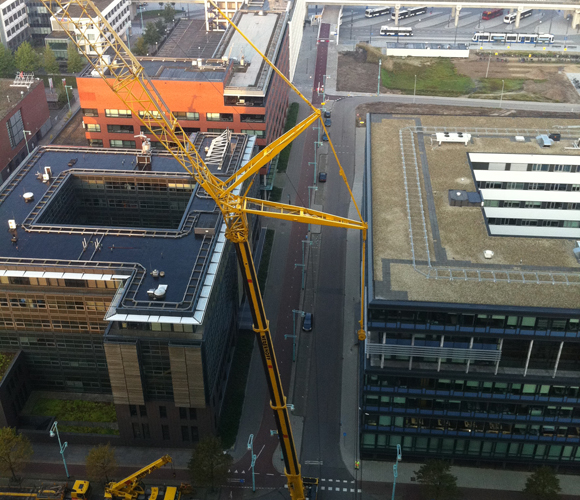
Yes. When machinery cannot be moved through regular access routes, we can hoist it through a roof, facade, or other suitable opening. Depending on the situation, we use mobile cranes, gantry cranes, or other specialized lifting equipment. We assess the location in advance and draw up a safe lifting plan.
How can production downtime be minimized?
We minimize production downtime by carefully preparing every plant relocation and carrying it out in phases. Whenever possible, we schedule work outside of production hours, on weekends, or during scheduled maintenance periods. Thanks to efficient planning, experienced specialists, and the right equipment, machines can be quickly disassembled, transported, and brought back online.
Is it possible to visit the location in advance?
Yes. Prior to a business relocation, we can conduct a site visit. During this inspection, we assess, among other things, the machinery, accessibility, lifting capabilities, floor load capacity, and the logistics route. Based on this, we develop an appropriate work plan, schedule, and a no-obligation quote to ensure the move can be carried out safely and efficiently.
Machine removals performed by Nedmove
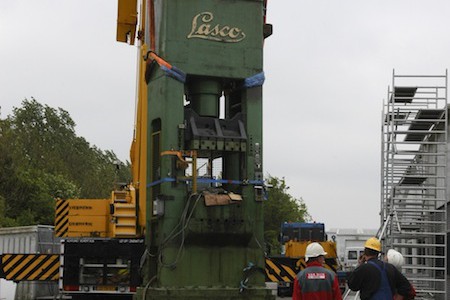
Aeroworks - Wieringerwerf
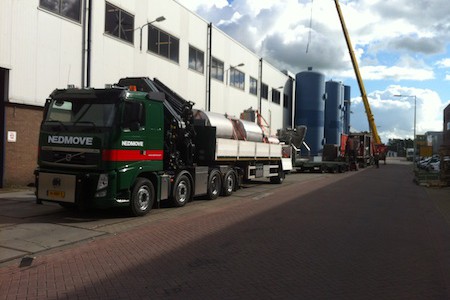
Remia move from Dijk food
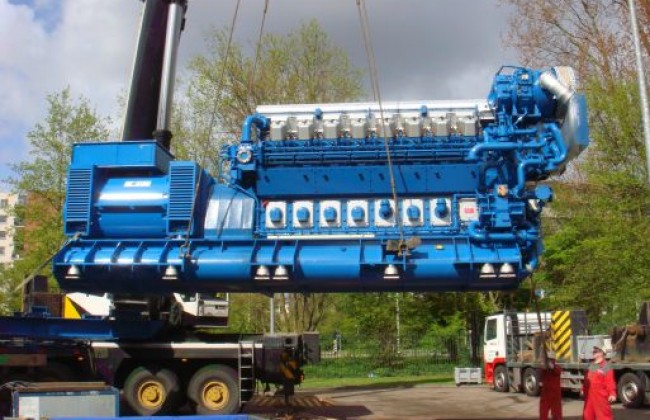
Black - Global Switch Amsterdam
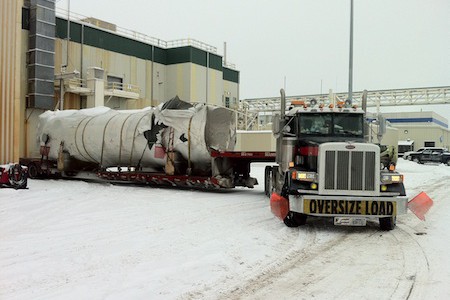
Purac - VDU plant Blair
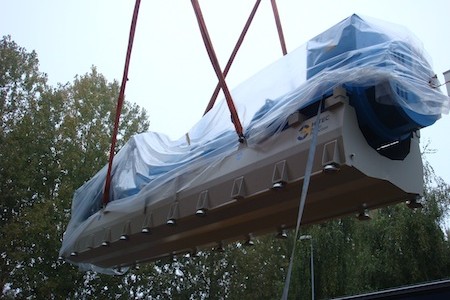
HITEC - RABO Boxtel
 English
  Nederlands
  Deutsch